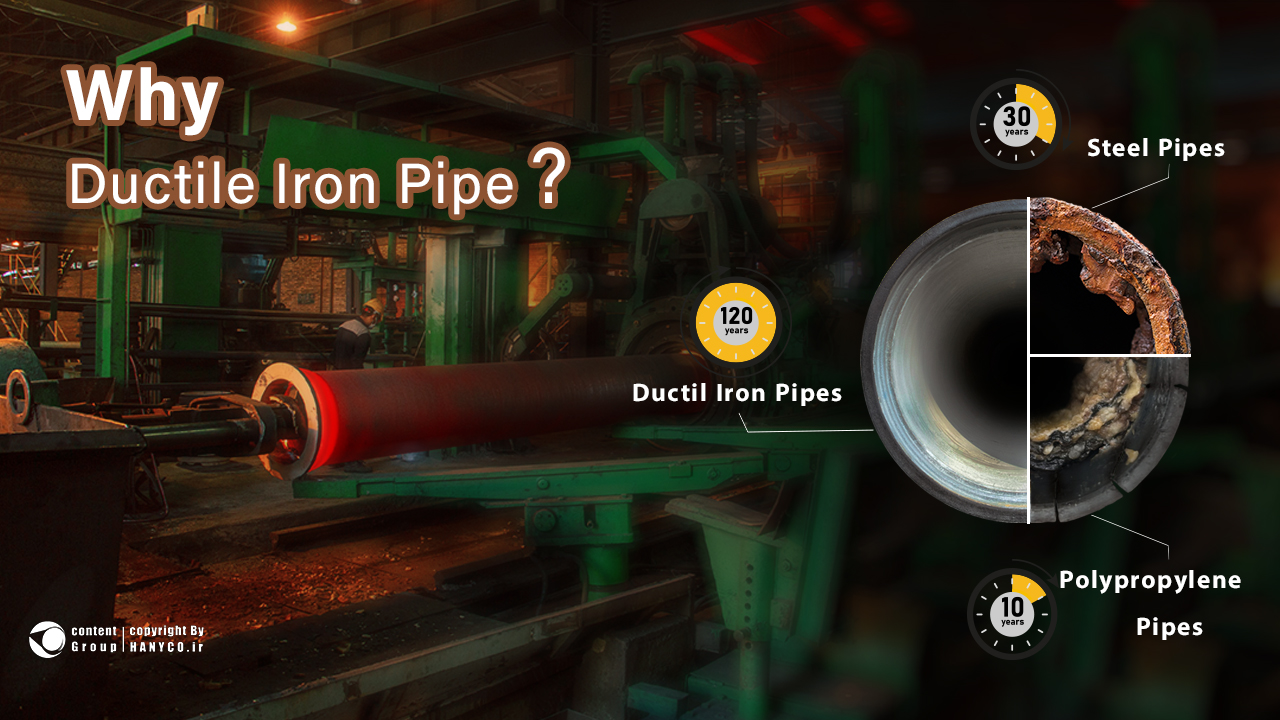
Ductile iron, also known as nodular cast iron, offers significant advantages due to its unique microstructure. This material is produced by adding small amounts of magnesium to molten iron, which transforms the graphite from its typical flake shape in gray cast iron to nodular or spherical forms. This transformation enhances the material's ductility, allowing it to absorb more energy before fracturing, unlike brittle gray cast iron. The nodular graphite structure not only improves tensile strength but also provides greater resistance to impact and fatigue, making ductile iron more reliable under dynamic loading conditions. Furthermore, its improved corrosion resistance is attributable to the fine distribution of graphite and the presence of a pearlitic or ferritic matrix, depending on the cooling rate. These properties, combined with the material's ease of castability into complex shapes, make ductile iron a highly efficient and durable material for a wide range of applications, including pipelines, automotive components, and structural elements.
The Role of Nodular Graphite in Ductile Iron
Nodular graphite in ductile iron greatly reduces stress concentration within the iron matrix because of its spherical shape and even distribution. In contrast, traditional gray cast iron contains graphite in the form of sharp, flaky particles, which create weak points where stress accumulates. These flakes serve as stress raisers, encouraging crack initiation and propagation under loading conditions.
However, in ductile iron, the addition of magnesium causes the graphite to form into nodules that are rounded and evenly distributed throughout the matrix. This spherical shape distributes applied stresses more uniformly throughout the material, preventing localized stress concentrations. Additionally, nodular graphite acts as a barrier to crack propagation by creating a more flexible and tougher matrix that can deform without causing immediate fracture. This leads to improved ductility and the material's ability to absorb more energy before failure, thereby increasing its overall strength and resistance to impact or fatigue. The smooth, rounded graphite nodules allow the iron matrix to maintain its integrity under stress, making ductile iron more resilient compared to its flake-graphite counterparts.
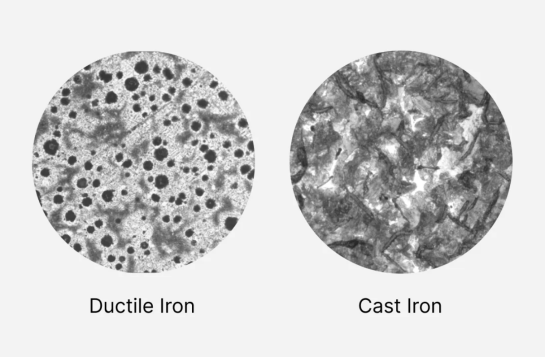
Figure 1: Microstructure of Ductile Iron and Gray Iron.
The Value of Ductile Iron Pipes
Choosing the appropriate material for pipelines is essential to guarantee long-term performance, safety, and cost-effectiveness across diverse operating and environmental conditions. Ductile iron pipes, with nearly seventy years of proven use in pipeline systems, are an excellent option thanks to their remarkable properties, including:
Durability
Ductile iron pipes owe their durability to a combination of high tensile strength, impact resistance, and ductility. These qualities enable them to withstand ground movement, internal pressure, and external loads without cracking or breaking, making them a highly reliable and economical solution for long-term water and wastewater infrastructure.
Energy Efficiency
Ductile iron pipes are highly energy-efficient thanks to their smooth internal surface, which minimizes frictional losses and enables water to flow with less resistance. As a result, less energy is needed for pumping, leading to lower operational costs throughout the pipeline's lifespan.
Corrosion Resistance
Ductile iron pipes exhibit excellent corrosion resistance, especially when protected with modern coatings. A common protective layer is a zinc coating, which acts as a sacrificial barrier, corroding in place of the iron. This is often combined with an outer layer of asphalt or epoxy to provide further protection against soil and moisture. Internally, a cement mortar lining is typically used to prevent corrosion from the water or wastewater being transported. These coatings, working together, significantly extend the pipe's service life, even in corrosive soils or environments.
Sustainability
Ductile iron pipes are regarded as highly sustainable due to several important environmental factors. Firstly, they are mainly produced from recycled materials, such as scrap metal, which reduces the demand for virgin resources and promotes circular economy practices. Secondly, ductile iron is fully recyclable at the end of its long service life, allowing the material to be reused in future products without creating waste.
Additionally, their long lifespan—often exceeding 100 years—reduces the need for frequent replacements, conserving resources and lowering environmental impact over time. Combined with their energy efficiency in operation, ductile iron pipes offer a sustainable solution with reduced environmental footprint for modern water and wastewater infrastructure.
Ensuring Hygienic Water Distribution
Ductile iron pipes are engineered for the sanitary transmission and distribution of water, featuring smooth inner surfaces that minimize sediment and biofilm buildup, thereby reducing the risk of contamination. The cement mortar lining commonly applied inside these pipes serves as a barrier against corrosion and prevents harmful substances from leaching into the water supply, helping to maintain water quality. Additionally, tight seals at the joints prevent leaks and shield the water from external pollutants. These attributes, along with resistance to microbial growth, ensure that water remains clean and safe throughout transportation and distribution.
Summary 1
Ductile iron pipes are a highly valuable alternative for pipeline systems due to their superior characteristics, including durability, energy efficiency, and environmental sustainability. Their high tensile strength and flexibility enable them to withstand internal and external pressures, ensuring long-term performance. The smooth internal surface reduces friction, enhancing energy efficiency by lowering pumping requirements. Environmentally, they are made from recycled materials, fully recyclable at the end of their service life, and have a long lifespan that decreases replacement needs. Corrosion resistance is achieved through the material's inherent properties and protective coatings such as zinc, bitumen, and epoxy. Ultimately, ductile iron pipes maintain hygienic water distribution with smooth surfaces and protective linings that prevent contamination and guarantee the delivery of safe water. These combined properties make ductile iron pipes an optimal choice for water and sewage infrastructure.
Summary 2 (A Comprehensive Perspective on Ductile Iron Pipes)
Ductile iron pipe is not just a material solution for water systems; it is also a crucial component for sustainable, resilient, and socially responsible infrastructure.
From a resilience standpoint, its exceptional strength, flexibility, and long service life make it highly resistant to physical stresses such as ground movement, traffic loads, and natural disasters. This reliability ensures water supply continuity in emergencies, minimizes service disruptions, and enhances community preparedness and recovery.
Ductile iron pipe significantly contributes to social impact and well-being by ensuring access to clean, safe drinking water, which is vital for public health and welfare. Its durability lowers maintenance and repair needs, especially aiding underserved communities by supporting sustainable and equitable water services. Fewer failures result in reduced road closures, minimal disruption to daily life, and increased public trust in infrastructure systems.
From a sustainability perspective, ductile iron pipe supports the circular economy by being produced from recycled materials and fully recyclable at the end of its life. Its long operational life leads to reduced greenhouse gas emissions throughout its lifecycle, lowers resource consumption, and improves energy efficiency, especially in water conveyance systems. It also aligns with global efforts to meet Sustainable Development Goals (SDGs).
In summary, ductile iron pipe is a forward-looking solution that supports not only technical excellence but also environmental stewardship, social equity, and infrastructure resilience, making it a valuable investment for the future.
Ductile Iron Pipes Resistant to Earthquakes
Ductile iron pipes, especially earthquake-resistant pipes, are designed to withstand the stresses and movements caused by earthquakes, significantly reducing water leakage during seismic events in Japan. In addition to all the features of standard ductile iron pipes, these pipes have additional properties. Here is how this goal is achieved:
- Flexible Joint Systems: Seismic ductile iron pipes are equipped with advanced joint technologies that provide greater flexibility. These joints can absorb and adapt to ground displacements during earthquakes, preventing misalignment and leaks. The flexibility of the joints ensures that the pipes can move and adjust without breaking or creating gaps through which water can escape.
- Seismic Design Features: Seismic-type ductile iron pipes are specifically designed with reinforced wall thickness and enhanced structural integrity. These features help the pipes maintain their shape and strength under the intense forces of an earthquake, preventing ruptures and reducing the likelihood of water leakage.
- Reducing the Impact of Ground Movement: Ductile iron pipes are designed to absorb and distribute the effects of ground movement more effectively than materials such as concrete or PVC. Their ability to withstand displacements and pressures from the earth during seismic events helps preserve pipeline integrity and reduces the risk of water leakage.
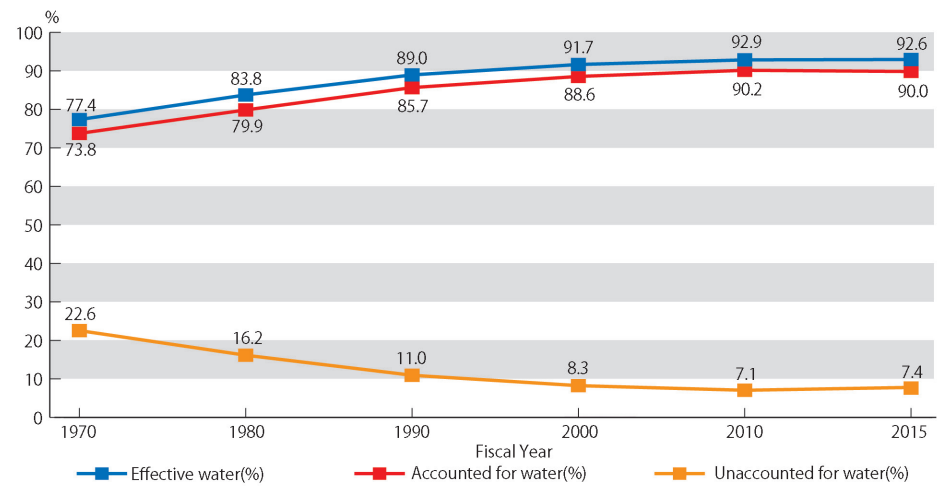
Studies by the Japan Water Works Association indicate that despite Japan’s seismic activity, they have significantly reduced water leakage by increasing the percentage of earthquake-resistant ductile iron pipes in their pipeline systems. As a result, in 2011, leakage rates were reduced to approximately 3%.
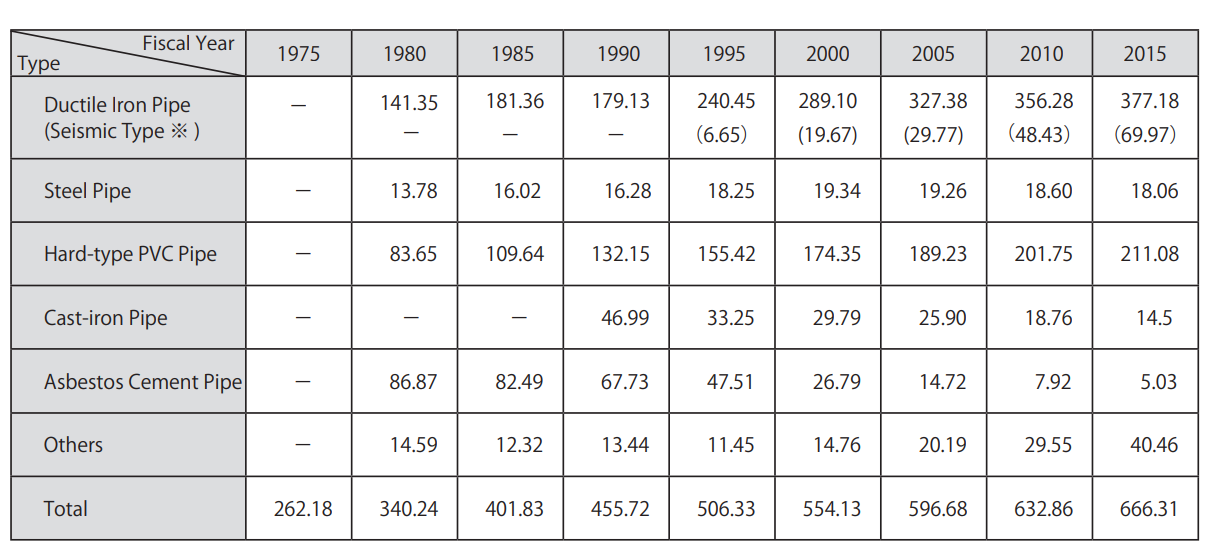
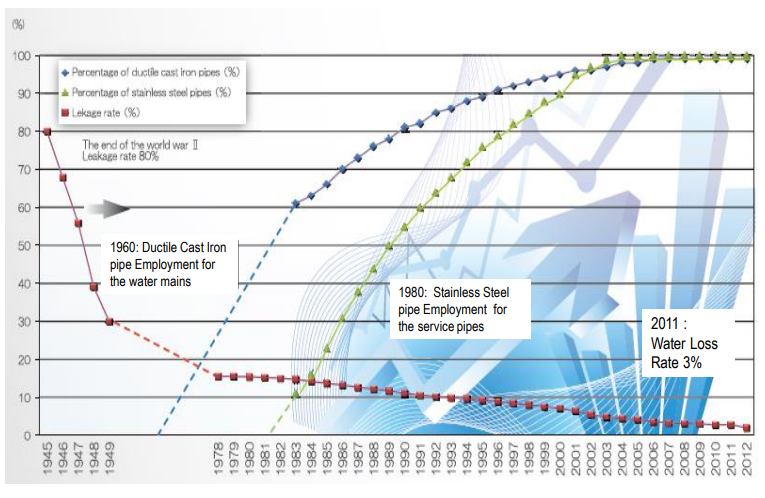
Unaccounted-for water (UFW) is the difference between the amount of water produced and the amount billed to customers. It includes water losses due to leaks, theft, metering errors, or unbilled uses.
Advantages of Ductile Iron Pipes Over Alternative Pipe Materials
DIPs Over Poly Ethylene Pipes (PE)
- The tensile strength of ductile iron pipes is 24 times greater than that of polyethylene pipes.
- The hydrostatic burst pressure of ductile iron pipes is 1.6 times higher than that of polyethylene pipes.
- The impact resistance of ductile iron pipes is 12 times greater than that of polyethylene pipes, which is important for transportation and installation.
- Polyethylene pipes have a limited usable temperature range, as mechanical properties degrade and pipe deformation occurs at around 80°C.
- Polyethylene pipes are sensitive to ultraviolet (UV) radiation, resulting in reduced mechanical properties, discoloration (yellowing), and free radical formation.
When are Ductile Iron Pipes Clearly Superior?
- Urban pipelines: where traffic load and risk of ground movement are high.
- Firefighting systems: the non-combustible nature of ductile iron pipes is a key safety factor.
- Large-diameter pipelines: ductile iron pipes offer better strength and flow capacity compared to polyethylene pipes.
- Trenchless installation: DIP is more resistant to stresses caused by HDD (Horizontal Directional Drilling) bursts or pipe ruptures.
Ductile Iron Pipes (DIPs) Versus PVC Pipes:
- Tensile strength of DIPs is 8 times that of PVC (can withstand higher internal and external pressures).
- Hydrostatic burst pressure of DIPs is 4 times that of PVC (longer service life).
- Impact resistance of DIPs is 13 times that of PVC (important during transportation, installation, and earthquakes).
- Limited usable temperature of PVC causes mechanical property degradation when exposed to around 60°C.
- PVC is sensitive to ultraviolet (UV) radiation (UV causes PVC to become brittle).
Where Ductile Iron Excels Over PVC:
- High-traffic areas and deep trench installations in cold climates, where PVC may become brittle.
- Industrial zones where fire resistance is essential.
- Seismic regions that demand flexible yet robust connections.
- Projects that require long-term durability and reliability.
DIPs Over Steel Pipes
- Installation: DIP pipes are easier and faster to install, while steel pipes usually require welding, which demands specialized equipment and skilled operators
- Corrosion resistance: Naturally, it is more corrosion-resistant due to the presence of silicon and the formation of a protective oxide layer.
- Cathodic protection: Steel pipes require cathodic protection, which involves costs for design, installation, maintenance, and ongoing care throughout their service life.
- Costs: Ductile iron pipes (DIP) have higher initial costs but lower maintenance expenses over time due to their durability and corrosion resistance. In contrast, steel pipes offer lower initial material costs but incur higher long-term maintenance costs.
When Is Ductile Iron Clearly Superior?
- Sewer systems: Choose DIP for its reliability and straightforward installation.
- In corrosive soils: DIP with standard coatings typically outlasts steel, even with minimal protection.
- Seismic and Heavy Load Conditions: DIP couplings can flex slightly under load, while rigid steel may crack or shear
DIPs vs. Concrete Pipes (CP)
- Flexibility: DIPs are flexible enough to accommodate ground movement and pressure variations, while CPs are rigid, which can result in cracking, underground shifting, or uneven loading.
- Installation: DIPs are quicker and easier to install thanks to flexible joints and lighter weight, whereas CPs require precise bedding and careful joint alignment.
- Applicability: DIPs are suitable for both above-ground and buried installations, while CPs are generally used for buried applications such as culverts.
- Tensile Strength: DIPs can withstand much higher internal pressures than CPs due to their superior tensile strength.
- Cost: DIPs have higher initial costs but lower long-term maintenance, while CPs offer lower upfront costs but may incur greater maintenance and replacement expenses.
When Ductile Iron Clearly Performs Better than Concrete
- Urban areas: DIP needs less space, uses lighter equipment, and allows for quicker installation.
- Seismic Zones: DIP withstands movement better, while concrete is prone to cracking under stress.
- Pressurized Systems: DIP joints offer greater reliability for water mains and rising mains.
- Long-Term Service: DIP preserves its integrity with minimal maintenance.
DIP vs. GREP (Glass Reinforced Plastic) Pipes
- Tensile Strength: DIP has 2.5 times the tensile strength of GREP, allowing it to withstand higher pressures.
- Ductility: DIP is highly ductile and can endure deformation under load, while GREP is brittle and prone to cracking under stress or localized impact.
- Thermal Expansion: DIP has a low coefficient of thermal expansion, making it stable against temperature changes, whereas GREP’s higher coefficient requires flexible joints.
- Recyclability: GREP pipes are not easily recyclable, but DIP is fully recyclable.
Where Ductile Iron Pipes are Clearly Superior
- Urban and Industrial Areas: DIP can handle heavy loads, traffic, and construction vibrations.
- Seismic or Shifting Soils: DIP joints provide flexibility and can tolerate ground movement.
- High-Pressure Systems: DIP is specifically designed for pressure-bearing applications.
- Abrasion-Prone Flows: DIP offers superior resistance to abrasion from sand, grit, and high-velocity flow.