DI Manholes
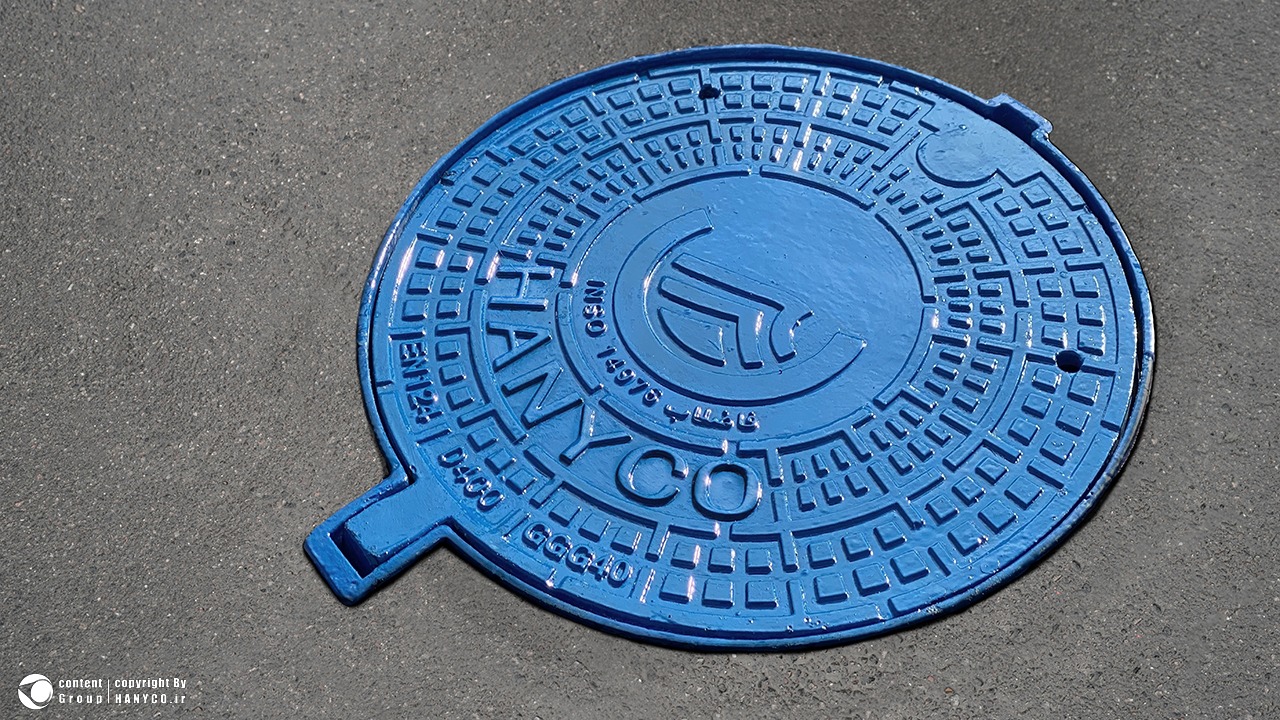
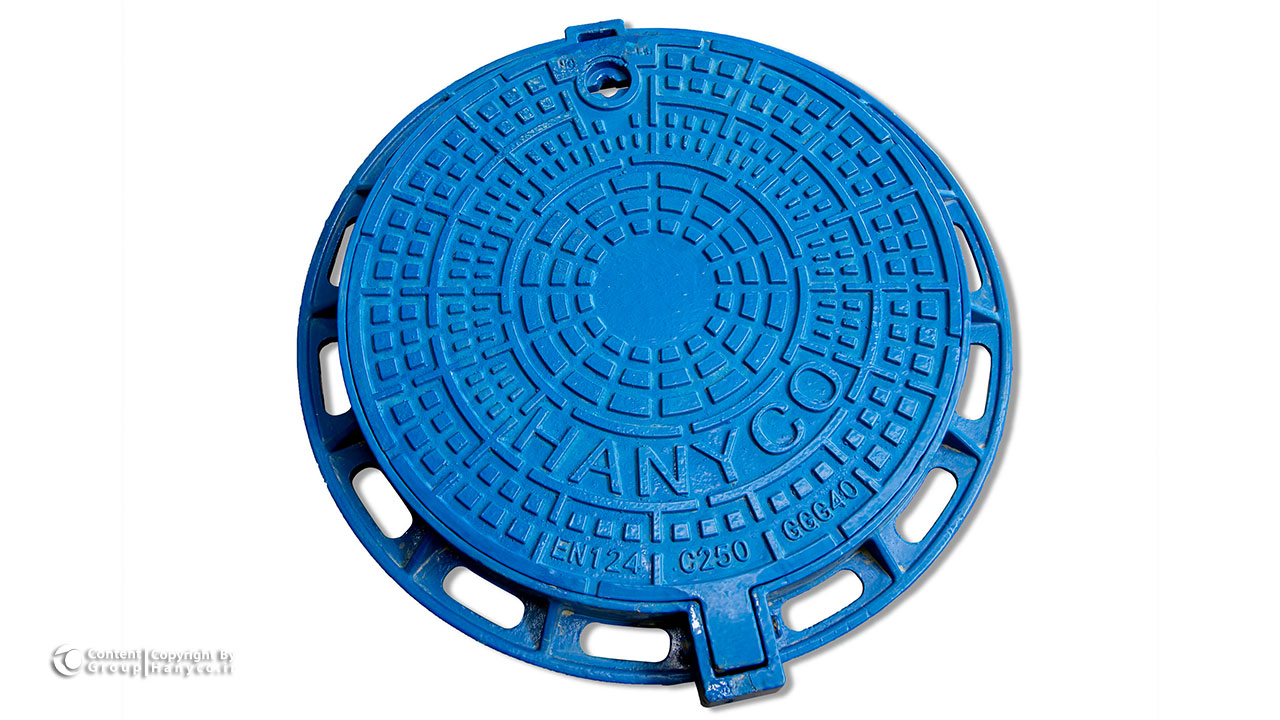
Hanyco manufactures ductile iron manholes in two different classes: C250 and D400
Introduction
Manholes are commonly used for cleaning, inspection, equipment checks, periodic maintenance, and similar tasks. The circular metal plates seen on streets are manhole covers. The primary function of manholes is to provide convenient access points to various sections of the sewage network. They are also used to access underground cables in telecommunications systems.
Manholes are typically made from ductile iron, cast iron, concrete, composite materials, and other substances. Due to its long lifespan, ductile iron is considered one of the most cost-effective materials. Manholes are classified based on the forces applied to them and their conditions of use.
One of Hanyco's products is a manhole cover made of ductile iron, manufactured using a fully automated lost foam casting production line. These manhole covers are designed and validated through finite element software simulations and performance tests, ensuring compliance with both national and international standards.
Application
- The suitable class of manhole cover or gully grating depends on the installation location. Various installation locations are categorized into groups numbered 1 to 6, as listed below.
- Group 1 (Class A): Areas designated exclusively for pedestrians and cyclists. (Maximum permissible load: 15 KN)
- Group 2 (Class B): Pedestrian zones and similar areas, including parking lots or parking decks. (Maximum permissible load: 125 KN)
- Group 3 (Class C): For gully gratings installed in roadside channels, measured from the curb edge, extending up to 0.5 m into the roadway and up to 0.2 m into the pedestrian area. (Maximum permissible force: 250 KN)
- Group 4 (Class D): For road carriageways (including pedestrian streets), hard shoulders, and parking areas, suitable for all types of road vehicles. (Maximum permissible force: 400 KN)
- Group 5 (Class E): Areas exposed to high wheel loads, such as docks and aircraft pavements. (Maximum permissible force: 600 KN)
- Group 6 (Class F): Areas exposed to very high wheel loads, such as aircraft pavements. (Maximum permissible force: 900 KN)
Tags